
Article: Organic Spirulina & Chlorella: Sourcing, Processing & Testing | On Target Living
Organic Spirulina & Chlorella: Sourcing, Processing & Testing | On Target Living
On Target Living has been sourcing spirulina and chlorella since 2009. Over that time, we’ve learned that not all algae products are created equal.
Where spirulina and chlorella are grown, the water used, how they are dried and processed, how the chlorella cell wall is opened, and how the finished product is tested all matter.
That’s why we believe in getting closer to the source.
Where Does On Target Living Spirulina and Chlorella Come From?
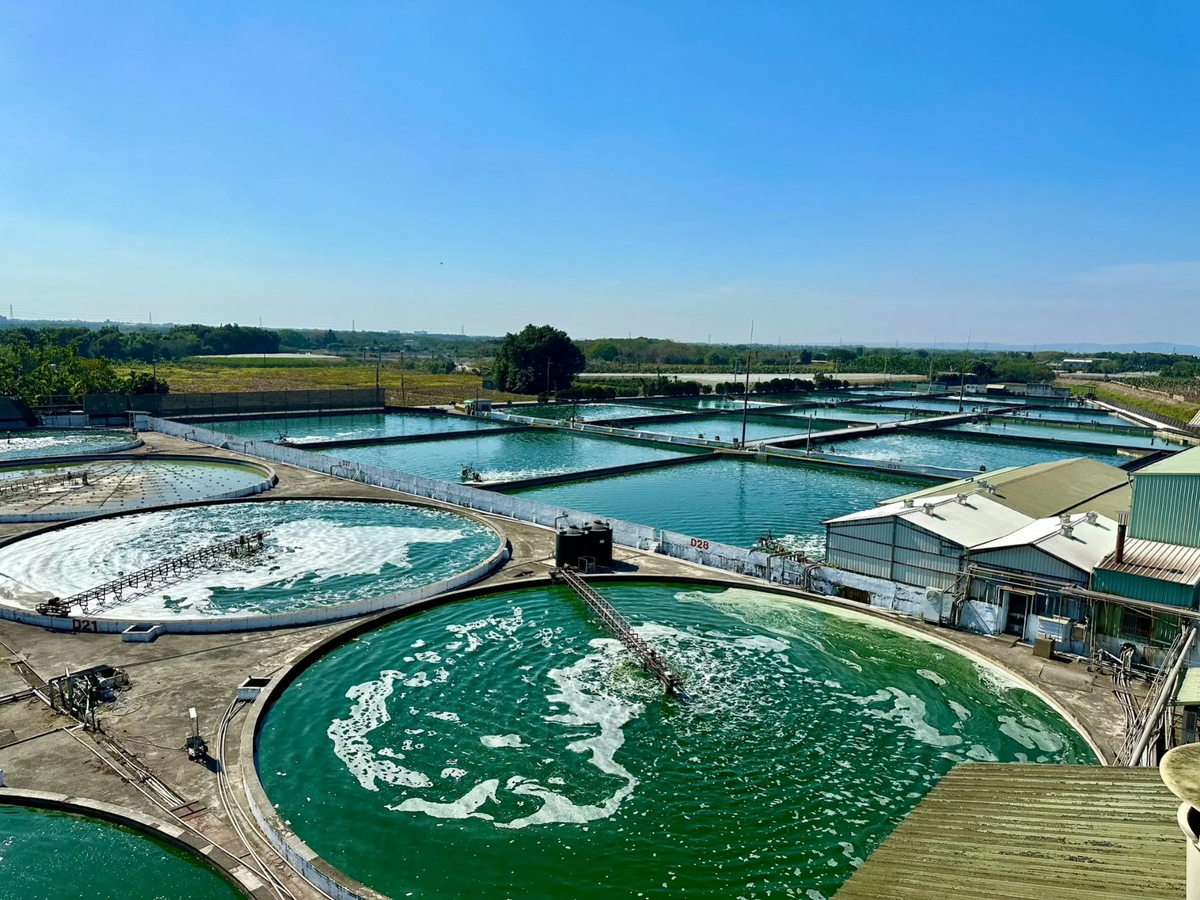
Our organic spirulina and organic chlorella are sourced from Taiwan, a region with decades of experience cultivating algae.
Our chlorella is grown in Pingtung, Taiwan, using natural mountain spring water originating from Da-Wu Mountain, along with abundant sunlight and clean air.
Because algae grows directly in its surrounding environment, water quality and growing conditions are particularly important.
For us, saying “Taiwan grown” isn’t enough. We want to know exactly where it comes from and how it is produced.
Is On Target Living Chlorella Cell Wall Cracked?
Yes.
Chlorella naturally has a tough outer cell wall. Disrupting that wall helps make the material inside the chlorella cell more accessible during digestion.
Our chlorella uses a patented Cracked Cell Wall technology, also known as Low-Pressure Flash Expansion.
Instead of relying solely on conventional mechanical grinding, this process uses controlled differences in pressure and temperature to crack the chlorella cell wall.
So when comparing chlorella products, don’t just ask whether the cell wall is broken.
Ask how it is broken.
How Is Our Organic Spirulina Dried?
Processing matters just as much as growing conditions.
Our organic spirulina uses a short-time heat treatment rather than prolonged conventional spray drying.
The spirulina is exposed to approximately 100°C for three seconds, while the internal temperature reaches approximately 70°C.
The purpose is to balance food safety with nutritional preservation.
This is why temperature alone can be misleading. Time matters too.
Three seconds of heat exposure is very different from keeping a food at an elevated temperature for an extended period.
Rather than using vague terms such as “gently dried” or “low-temperature processed,” we prefer to tell customers what actually happens.
Is Our Spirulina and Chlorella Tested for Heavy Metals?
Yes.
Our algae products undergo quality testing that includes heavy metals and microbiological contaminants.
Recent testing of our Organic Chlorella/Spirulina Tablets included specifications for arsenic, cadmium, lead, and mercury, using ICP-MS testing.
Example:
 The same testing also included total plate count, mold and yeast, Salmonella, and E. coli.
Recent results showed Salmonella negative and E. coli negative.
We believe customers should look beyond the words “tested” or “third-party tested.”
Ask to see the Certificate of Analysis, or COA, and the actual results.
Is Spirulina Tested for Microcystins?
Our recent testing included four common microcystin variants:
Microcystin-LR, Microcystin-RR, Microcystin-LA, and Microcystin-YR.
All four were reported as N.D. — not detected — at the reported 2 ppb limit.
Microcystin testing is an important question to ask when evaluating a spirulina product because contamination can occur when unwanted cyanobacteria are present.
What Is in Our Organic Spirulina + Chlorella Tablets?
Each 250 mg tablet in our 50/50 blend contains:
125 mg organic chlorella + 125 mg organic spirulina.
Our testing also confirms naturally occurring nutrients including vitamin A as beta-carotene, vitamin K1, calcium, iron, magnesium, and zinc.
Why Do We Choose Organic Spirulina and Chlorella?
We chose organic spirulina and chlorella for more than the word “organic” on the package.
One of the biggest reasons is supply-chain transparency.
Organic products imported and sold as USDA Organic must follow National Organic Program requirements. Organic imports into the United States require documentation through the NOP import system, creating greater traceability through the supply chain.
That matters when ingredients are being grown and processed thousands of miles away.
Organic certification creates additional documentation around the producer, processor, exporter, importer, and certifier.
For us, that accountability is valuable.
Organic certification does not automatically mean that every organic product is superior to every non-organic product.
But it does provide an additional system of standards, documentation, certification, and traceability.
That is one of the primary reasons On Target Living has chosen organic algae.
What Should You Look for When Buying Spirulina or Chlorella?
Don’t judge an algae product only by the front of the package.
Look at where it was grown, what water was used, whether it is certified organic, how the spirulina was dried, how the chlorella cell wall was opened, and whether the finished product was tested for heavy metals, microbes, and microcystins.
Then ask one more question:
Can the company show you the testing?
At On Target Living, we believe transparency is part of quality.
We’ve been sourcing spirulina and chlorella since 2009, and our philosophy remains simple:

Get closer to the source. Know where it comes from. Know how it is processed. Know how it is tested. We only promote what we consume!

Leave a comment
This site is protected by hCaptcha and the hCaptcha Privacy Policy and Terms of Service apply.